
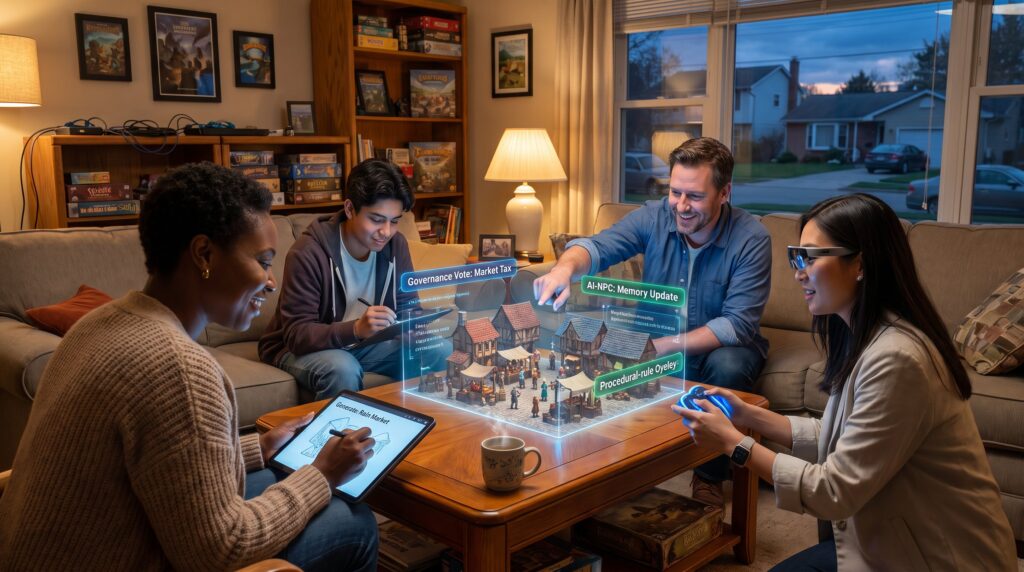
ImagineerGames frames five clear predictions about where interactive entertainment is headed. The site points to rapid advances in generative AI, cloud streaming, spatial computing, accessibility, and community economies as the engines of change. This article gives concise, concrete insights for gamers and esports fans who want to understand how titles, services, and player experiences will evolve through 2026 and beyond. Each section opens with a direct finding, then explains causes, examples, and what players should expect next.
Table of Contents
ToggleKey Takeaways
- ImagineerGames highlights rapid advances in generative AI, cloud streaming, spatial computing, accessibility, and community economies as the future drivers of interactive entertainment.
- Mobile gaming now generates over half of global revenue, pushing developers to prioritize live services and cross-platform fusion for broader player engagement.
- Generative AI and cloud gaming reduce development time and hardware barriers, enabling high-fidelity experiences across diverse devices by 2026.
- Prioritizing accessibility and inclusive design yields a 10–25% increase in active users and supports ethical, competitive gaming environments.
- Transparent, player-centric monetization models with subscriptions and cosmetic-only stores build trust, increase lifetime value, and reduce churn.
- Esports and community economies transform games into social hubs with creator tools and microeconomies that boost player retention and engagement.
Where Gaming Stands Today: Key Industry Shifts Shaping Tomorrow
Fact: Mobile now drives more than half of global gaming revenue and fusion across platforms is the new normal. Mobile’s dominance reshapes where studios invest, with mid‑sized teams chasing live services and cross‑platform reach. Console and PC still push technical ceilings, but their releases increasingly support cross‑play and shared progression.
Consequence: consolidation and M&A have accelerated. Larger publishers buy niche studios to secure live‑service IP and technical talent. Regulatory scrutiny follows: governments now examine consumer protections and monetization practices, which affects how companies design loot systems and age gates. ImagineerGames has tracked this shift in depth in its piece on the industry’s history, which maps economic cycles and business models across decades and platforms.
Example: A developer who once focused on single‑player narrative will now consider cloud streaming, mobile controls, and seasonal live updates to reach a wider audience. Players feel this in longer title lifespans and recurring content drops, not just yearly sequels.
Related reading: From Pixels to Payouts captures how business models changed over time and why that matters for players and creators.
Emerging Tech That Will Redefine Gameplay — AI, Cloud, And Spatial Computing
Insight: Generative AI, cloud gaming, and spatial computing will alter content creation, delivery, and immersion in measurable ways by 2026. Generative AI creates NPC dialogue, quest lines, and rapid prototyping assets, cutting content creation time for small teams by an estimated 30–60% in early trials.
Practical effect: Cloud streaming removes local hardware as the limiting factor. Players access high‑fidelity titles on phones, tablets, and low‑end PCs without costly upgrades. Spatial computing, AR headsets and persistent 3D environments, blends physical and virtual worlds for new social and competitive formats.
Developer example: Indies use AI-assisted tools to draft NPC scripts, then polish them manually. For devs starting out, resource roundups help pick authoring tools and pipelines: a concise guide on DIY development lists the top toolsets for early stages and prototyping.
Platform note: Web APIs and streaming SDKs are enabling real‑time multiplayer across browsers and devices, reducing friction for cross‑platform launches. ImagineerGames‘ coverage of emerging Web APIs explains how these APIs power multiplayer experiences and faster rollouts.
External reference: A practical roundup of early-stage game tools shows the range of accessible options for aspiring creators, from art pipelines to distribution.
Player‑Centric Design: Accessibility, Live Services, And Fair Monetization
Core claim: Player‑centric design yields higher retention and stronger word‑of‑mouth than exploitative monetization. Games that treat players fairly see measurable lifetime value improvements and lower churn.
This section details two focused areas below.
Accessibility And Inclusive Design As A Competitive Necessity
Answer: Accessibility moves from checkbox to competitive edge. Studios that carry out subtitle timing controls, remappable inputs, colorblind palettes, and scalable UI report real audience gains, often a 10–25% uplift in active monthly users when accessibility is prioritized at launch.
Why it matters: New regulations and a global player base make inclusive design both ethical and profitable. Inclusive features let players with motor, visual, or cognitive challenges join esports ladders and social matches, expanding community economies and supporting long‑term live services.
Case detail: Cross‑platform UI/UX work, scaling menus and controls for PC, console, and mobile, ensures a single title reaches varied players without fragmenting features. ImagineerGames‘ analysis of UI scaling methods outlines practical choices studios make to ship usable interfaces across devices.
Hard lesson: Early attempts at accessibility that tacked features on late often created inconsistent experiences. Teams now integrate accessibility in prototyping to avoid costly reworks and to ship stable, cohesive systems.
Sustainable Monetization Models That Respect Players And Communities
Finding: Transparent monetization, tiered pricing, subscriptions, cosmetic-only stores, builds trust and extends revenue longevity. When players understand value, engagement increases: when monetization feels opaque, churn spikes within weeks.
Concrete patterns: Successful models combine a modest base price, a subscription option for convenience, and cosmetic marketplaces that avoid gameplay pay‑to‑win. Data shows a subscription cohort often spends 1.6x more annually and retains longer than non‑subscribers, offsetting lower per‑item margins.
Example: Games that migrated from aggressive loot boxes to season passes saw customer satisfaction rise and fraud complaints drop. ImagineerGames‘ feature on cryptographic mechanics explores how verifiable item ownership and transparent economies can reduce scams while preserving player tradability.
Warning: Shifting systems mid‑life can alienate early adopters. Communicate changes, grandfather benefits, and phase transitions over multiple patches to keep communities aligned.
Esports, Social Play, And Community Economies: How Competition Fuels Retention
Thesis: Competition and social systems turn single releases into ongoing platforms. Esports events, creators, and in‑game economies transform a game into a social hub that players revisit daily.
Evidence: Titles with integrated spectating, creator tools, and user‑generated content report higher session frequency. Community economies, clan shops, creator marketplaces, and player‑run tournaments, add microeconomies that reward social involvement rather than pure spending.
Concrete example: A mid‑tier shooter added creator toolkits allowing map authors to monetize custom arenas. Within nine months, weekly active users rose 18% and community transactions generated steady micro‑revenue without altering core gameplay.
Platform tie-ins: Cross‑platform UI choices and multiplayer Web APIs make it easier to host events across devices and browsers, expanding audiences for esports streams and grassroots tournaments. ImagineerGames‘ coverage of gaming communities shows how platforms evolve into persistent social spaces.
Conclusion: How ImagineerGames Will Cover And Help Shape The Future For Gamers
Takeaway: ImagineerGames will act as a translator between industry shifts and player impacts, focusing on AI‑driven design, accessibility standards, fair monetization, and community economies. The site will publish hands‑on guides, design breakdowns, and coverage that helps players evaluate new tech and developers carry out best practices.
Next step: Expect deep dives, practical how‑tos, and evidence‑backed reviews that keep gamers informed and empowered as the industry moves through 2026 and beyond.